We leave Kyoto with only our backpacks for three days, after sending out our luggage to Nagano. Coming ahead: Himeji castle, part of the Nakasendo trail from Magome to Tsumago, and Matsumoto.
Two castels, rice fields, a miso brewery and a trail in Japan
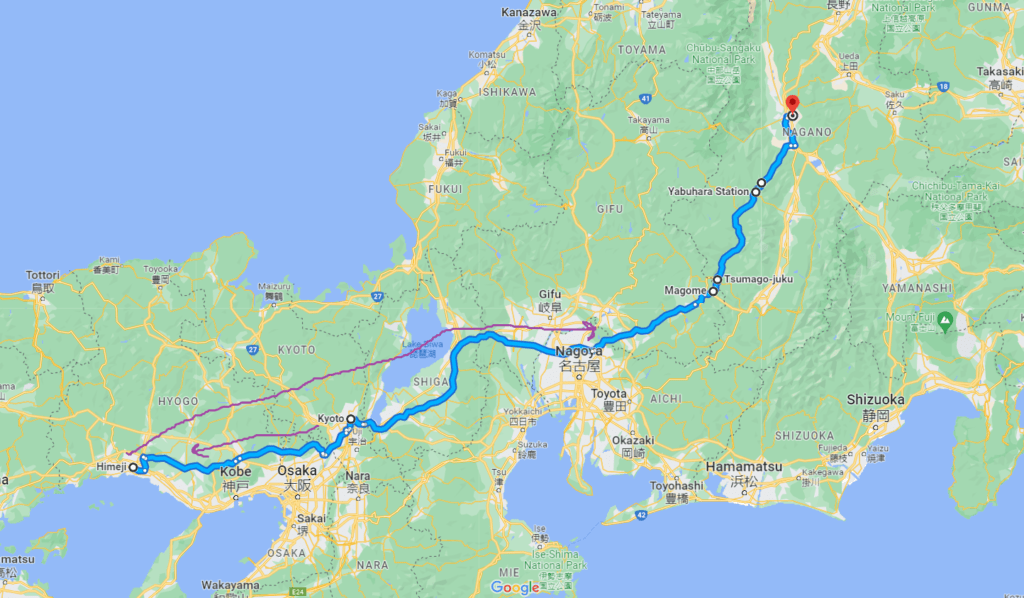
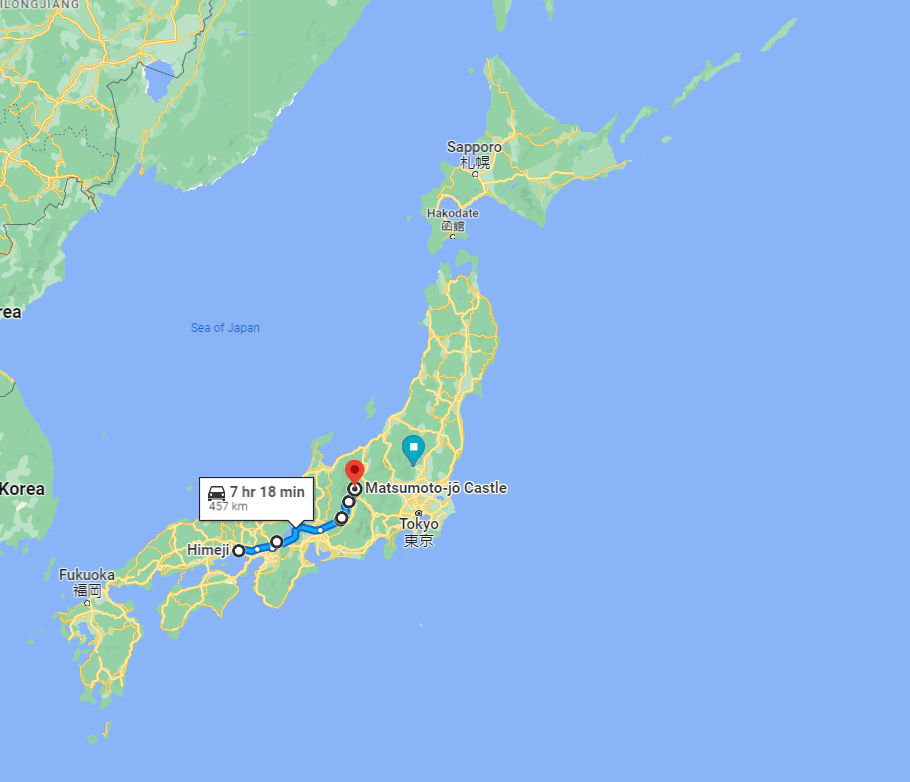
These two maps give you an idea of the itinerary, although they’re not totally accurate as Google Maps doesn’t allow to create mixed itineraries or public transportation journeys with several destinations.
Himeji
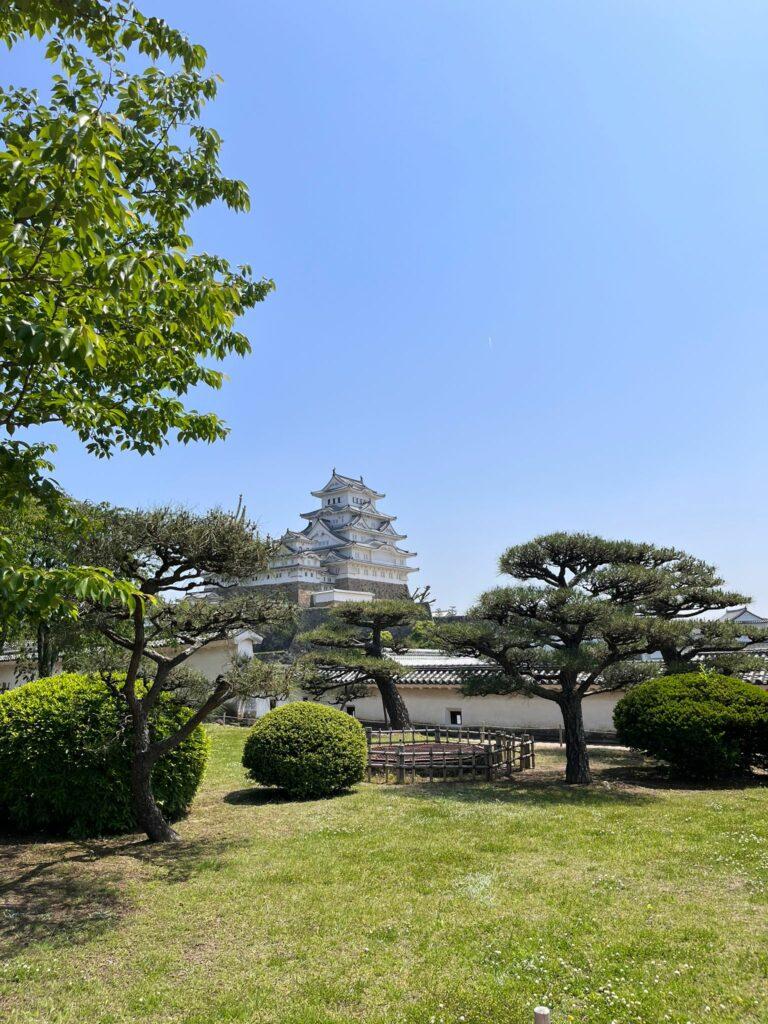
We take the shinkansen from Kyoto to Himeji at 8.01 AM for a 45 minutes ride. As soon as we step out of the station, we can see the castle on the horizon. Excepted two European organized tour buses, there’s hardly anybody visiting.
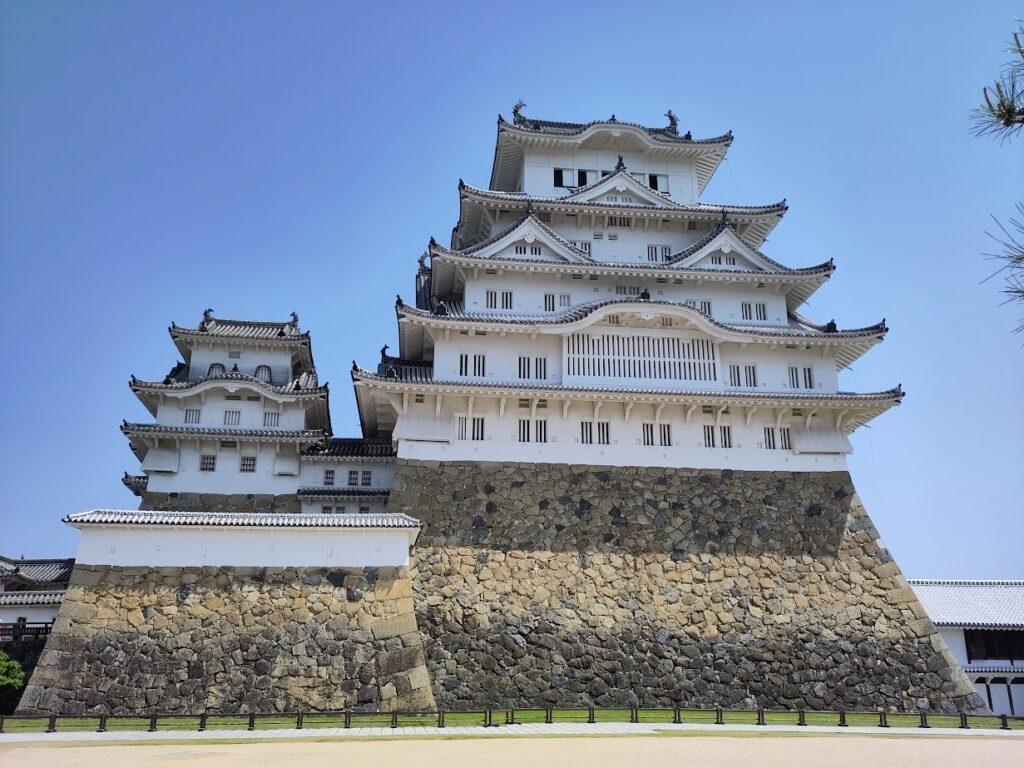
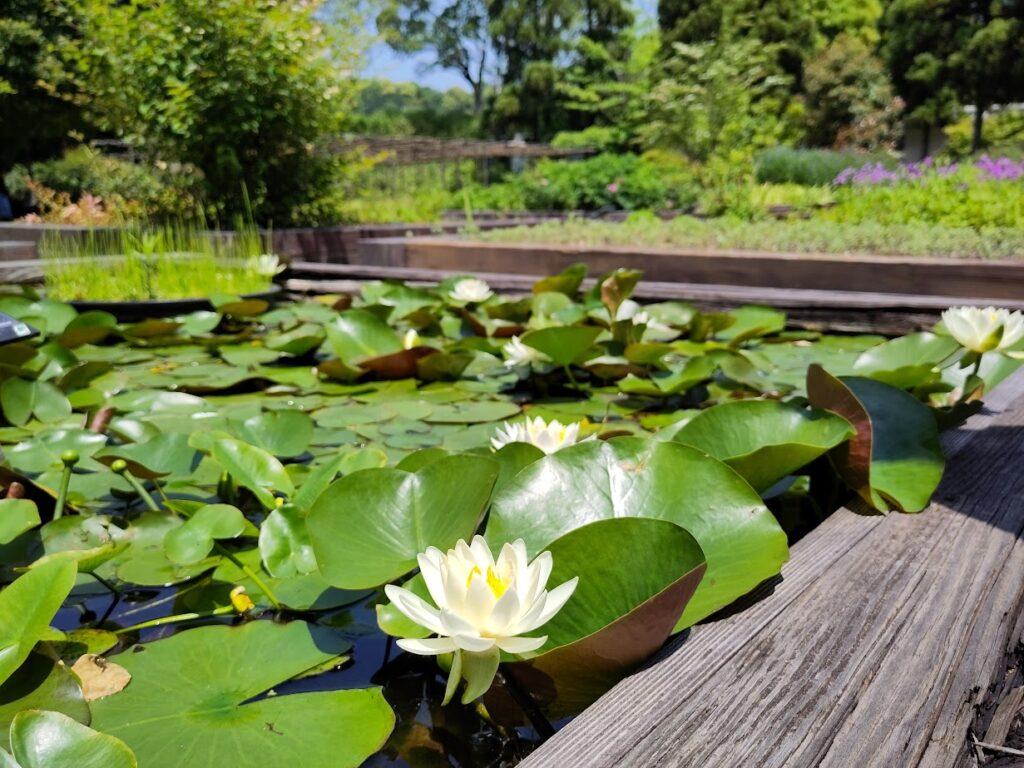
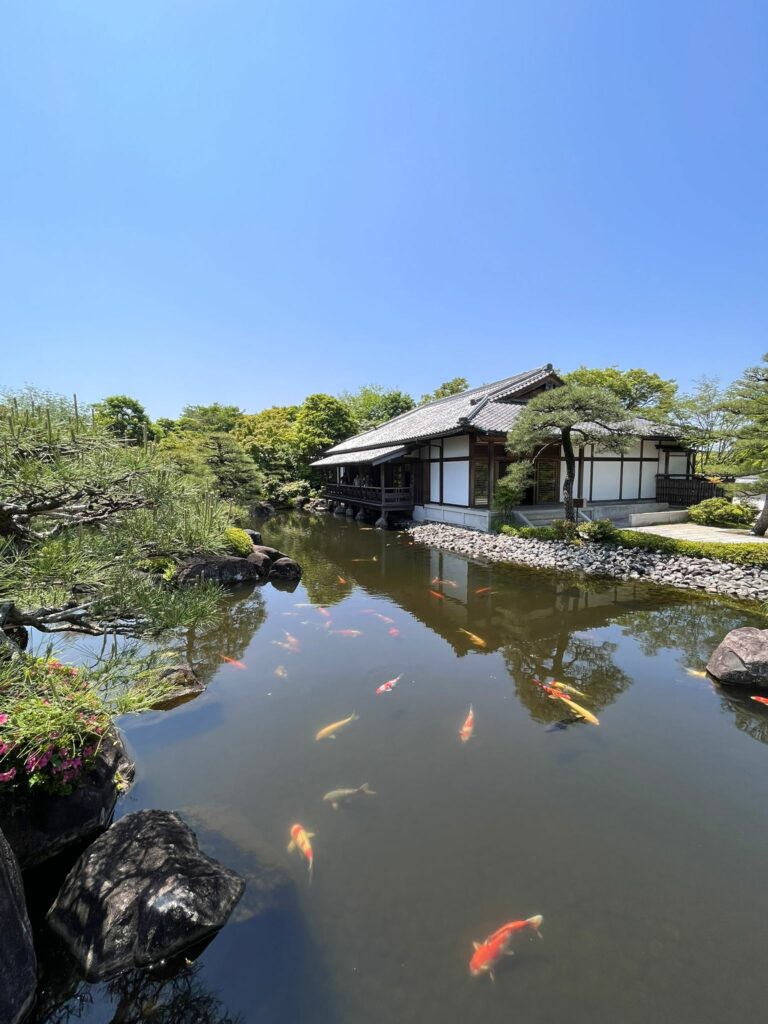
This is our first Japanese castle, and we discover that the inside has nothing in common with European castles. It’s very simple, with many steep stairs. On the other hand, the outside is stunning. We continue the visit to Koko-en, a garden right next to the castle.
Nakasendo trail, from Magome to Tsumago
A bit before noon, we’re done with Himeji and buy our first eki-ben : they are bentos that you find in long distance train stations, to be eaten in the shinkansen. They’re fun to try and you can sometimes find local specialty ones, but overall they’ll cost most than a konbini meal.
We take the shinkansen to Nagoya for 1.15 hour, then a JR express train to Nakatsugawa (45 minutes), and finally a bus taking us on a winding road until we reach Magome, where we’ll spend the night.
Everything you need to know for your first trip to Japan: on buses, and many other things.
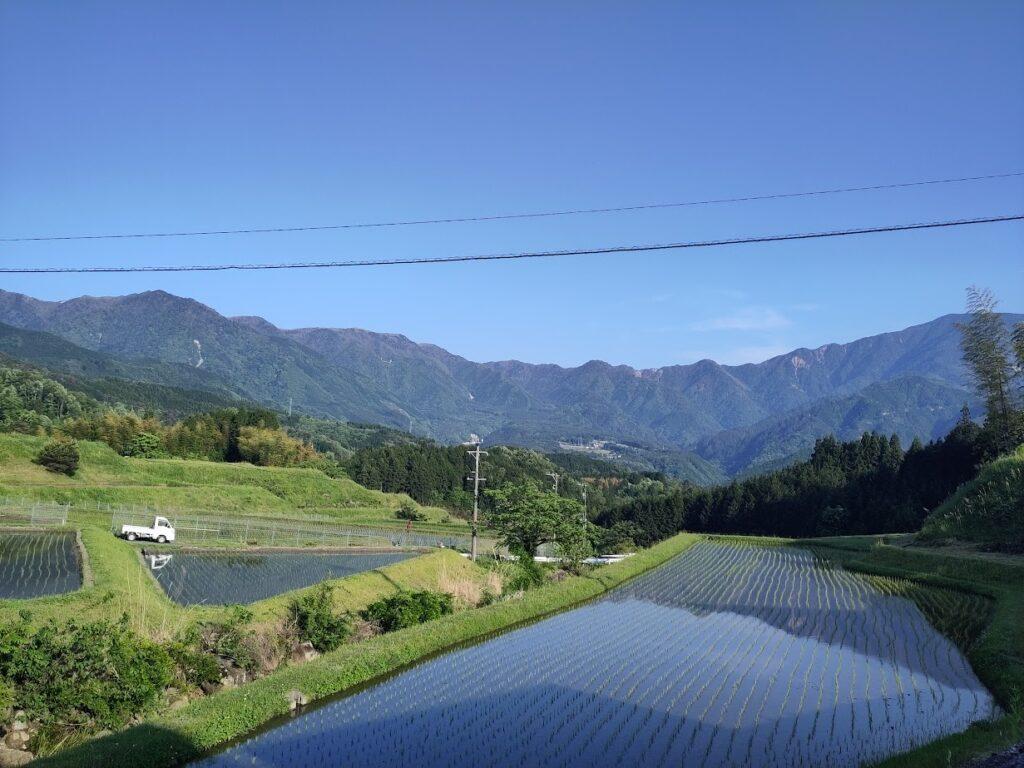
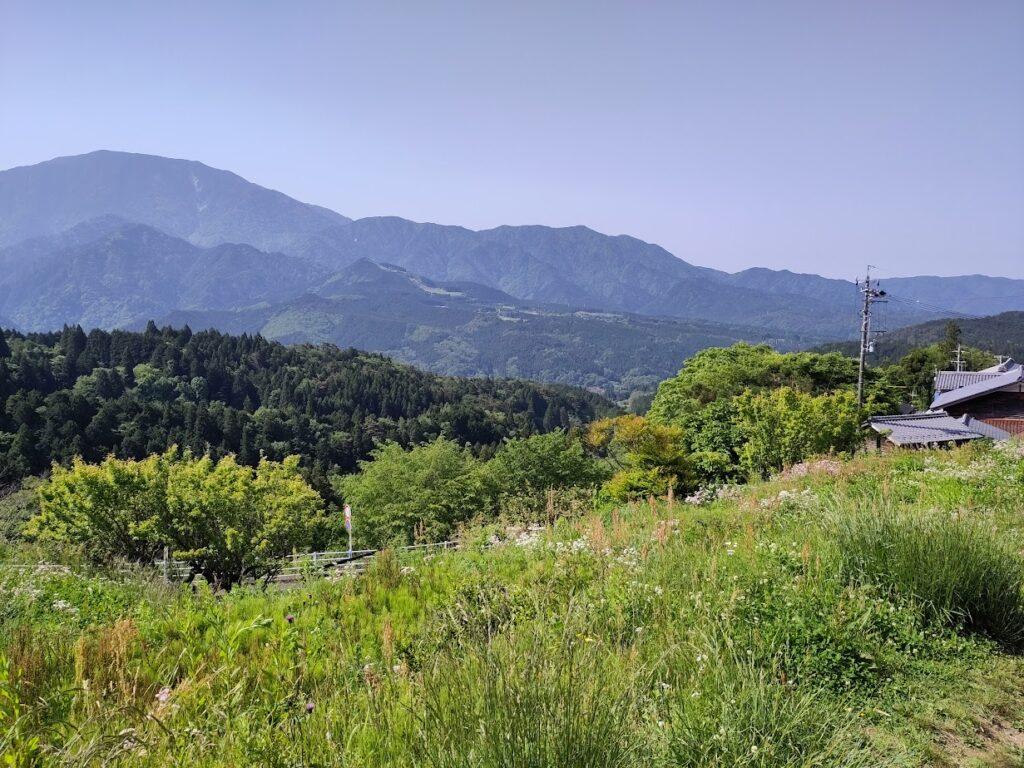
We discover new landscapes, made of rice fields and green mountains in background. It’s incredibly quiet and there’s no word to express how beautiful it is.
Guest house night in Magome
Tonight we’re staying at a guest house, and I can only recommend it because it was one of our best experiences in Japan:
🔖Guest House Motomiya, Magome (Nakatsugawa)
We stay at Keiko san’s, together with a Welsh couple and an American woman who lived in Japan for 12 years, and will be our interpreter during our conversations with our host.
The dinner is included in the reservation and we eat all together, slowly getting to know each other while Keiko san appears from time to time to bring the next course of our kaiseki meal and to check if everything’s fine. Ingredients are fresh and local, from the river fish to the mountain and garden vegetables. The food is amazing and you cannot compare this experience with going to a restaurant.
Keiko san tells us she picked part of the vegetables from her garden and the forest this very morning. She even went as far as ordering a craft gluten-free bread from a friend of hers to accommodate one of her guests tonight, and prepared a vegan version of her kaiseki course for another one.
When comes the time for a dessert and tea, Keiko san joins us for a chat (facilitated by the guest who’s fluent in Japanese). Keiko san asks if it’s ok to take pictures of us, so that she can add them to her collection on the wall, with our names and country.
Around 8 PM, we all disappear in our rooms after a very satisfying meal (regarding food as well as conviviality and connections). The only noise we hear tonight is the frogs and crickets concert outside.
We slept like babies!
Up to the Nakasendo trail
After a great night, we enjoy a kaiseki-style breakfast together: fresh vegetables from the garden, fried egg, toasts, fruit salad and yoghurt. We also enjoy coffee that was roasted by Keiko san’s son, the owner of the village coffee shop.
We leave at 8 AM with our backpacks, with Keiko san waving goodbye until we’re out of sight. The trail starts with the center of Magome, a beautiful two-streets village. Only in Japan: this rural village is decorated with a few Pokémon Go artefacts, due to a partnership between the mobile game and the town.
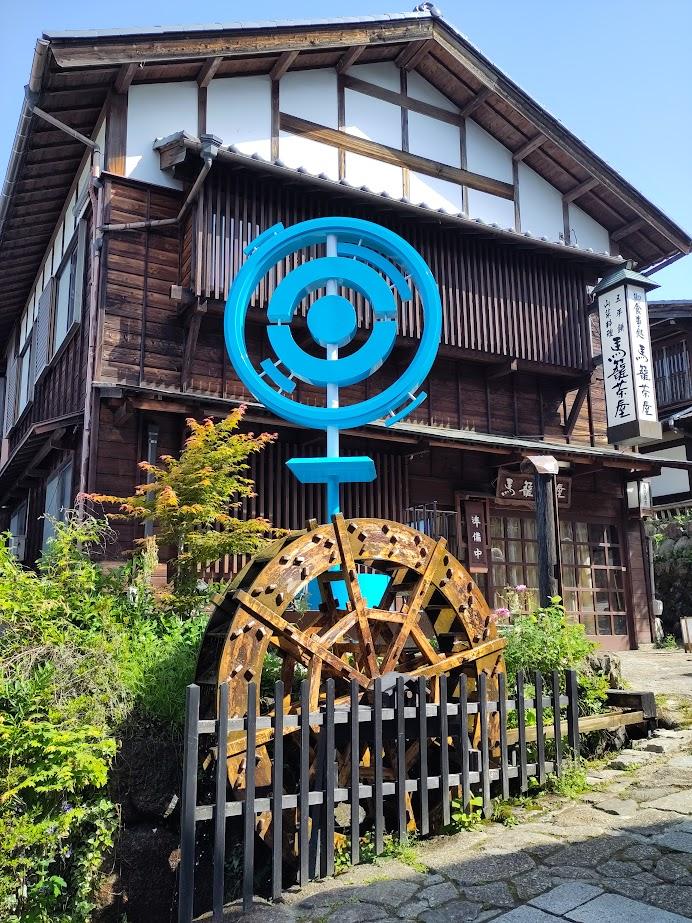
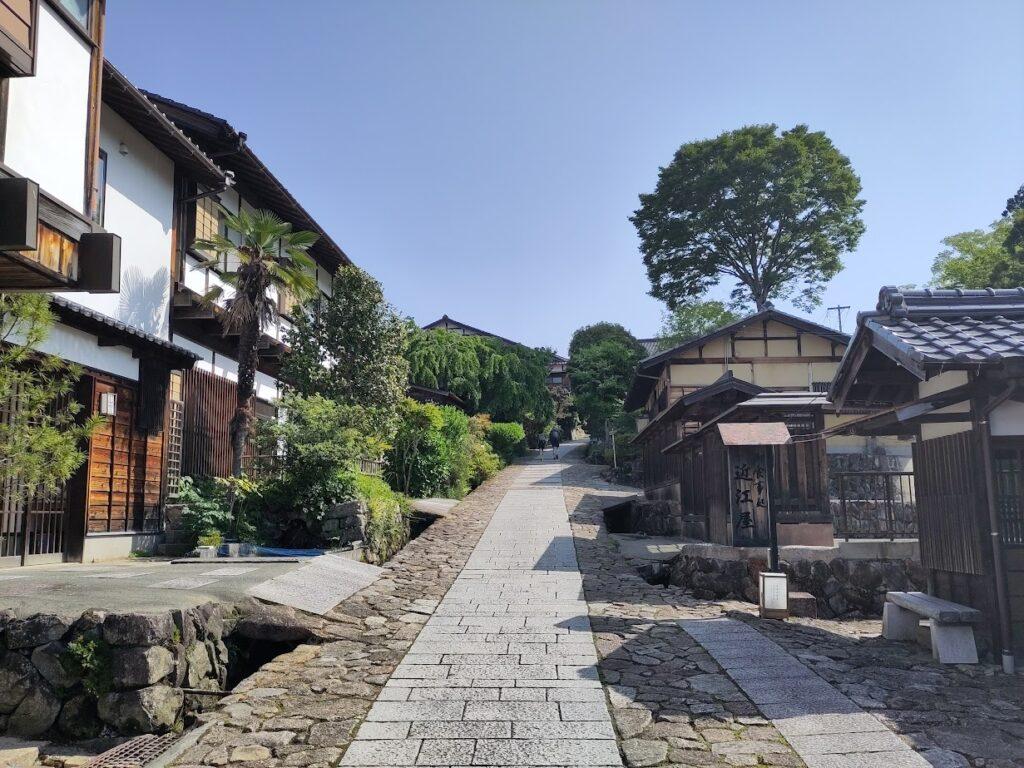
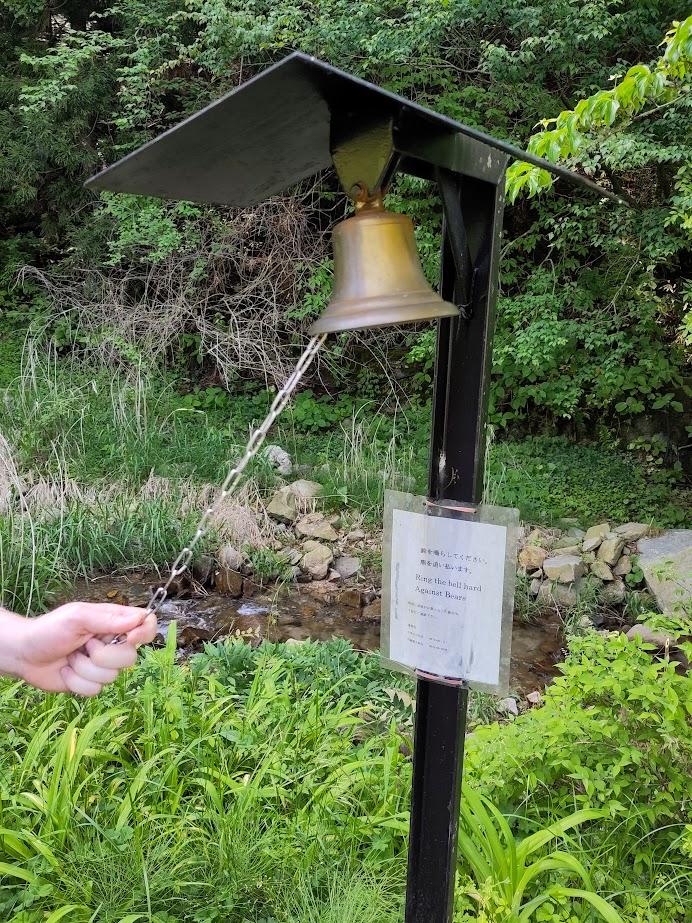
Bears are a potential threat on the Nakasendo trail, so you should always check the current threat status before starting. There are big bells along the trail, that you should ring in order to scare them away.
Until Tsumago, the hike is a succession of forest and paved roads. When the weather is hot and sunny, the asphalt roads are making it worse. In addition, the road is going up and up.
I’m a bit disappointed by the hike in between the two villages, as I totally misunderstood and thought we would walk across charming villages all along. That’s really what blog articles and videos made me think. The time spent on paved road is much longer than time spent in the forest and even more in small villages.
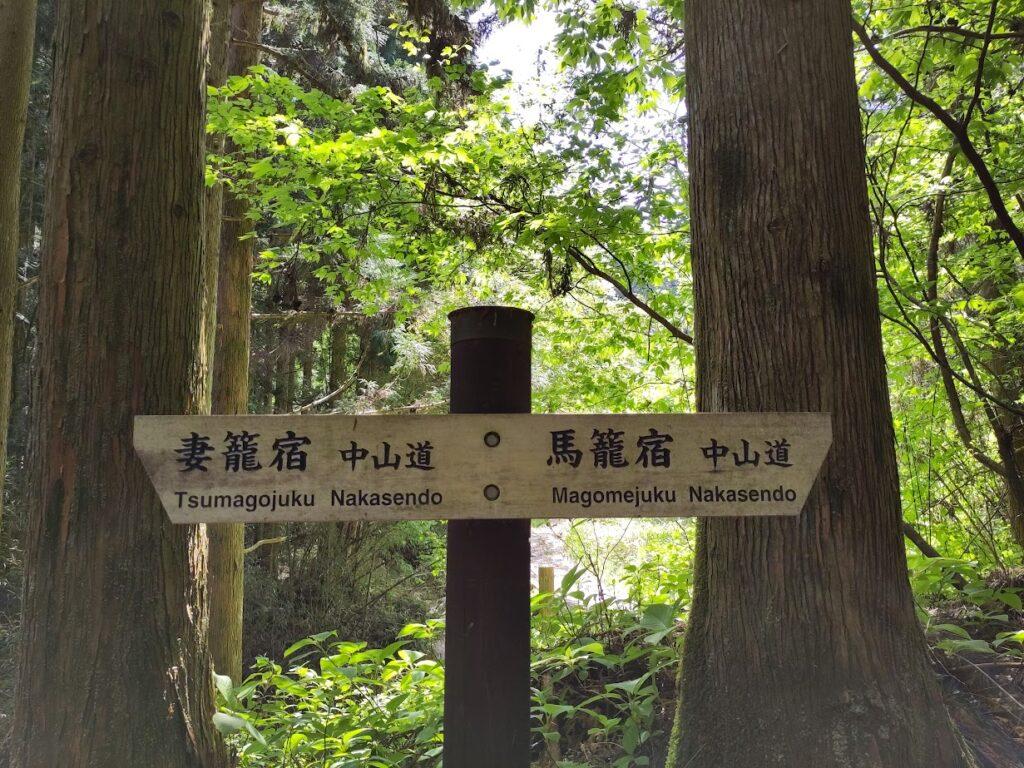
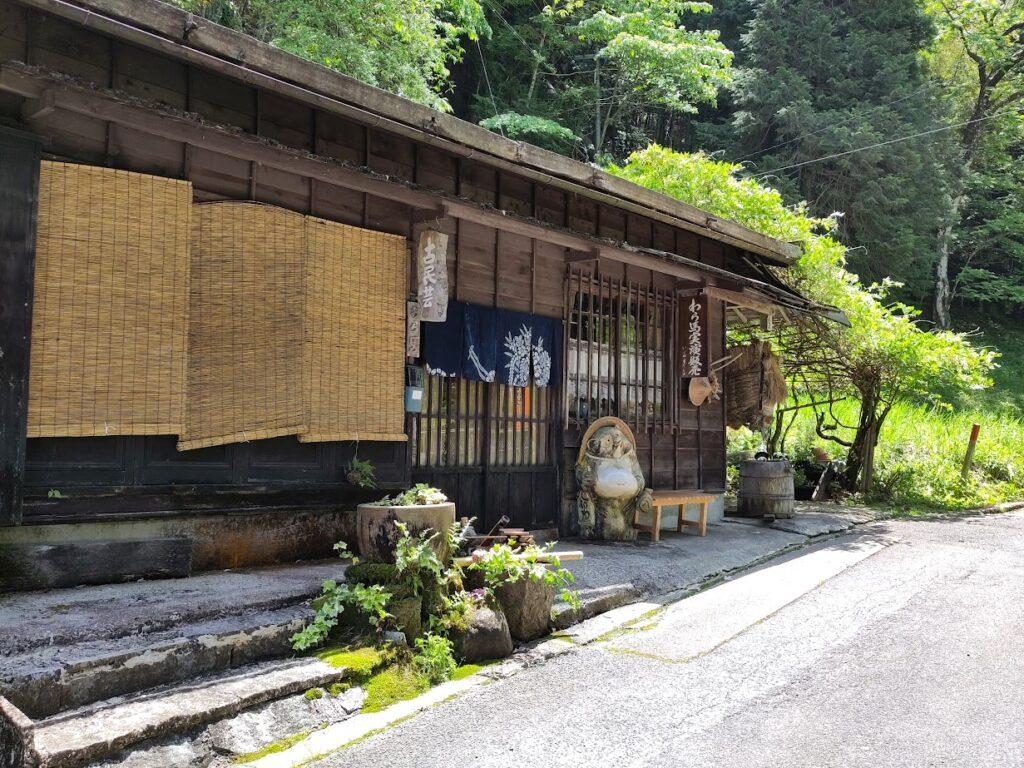
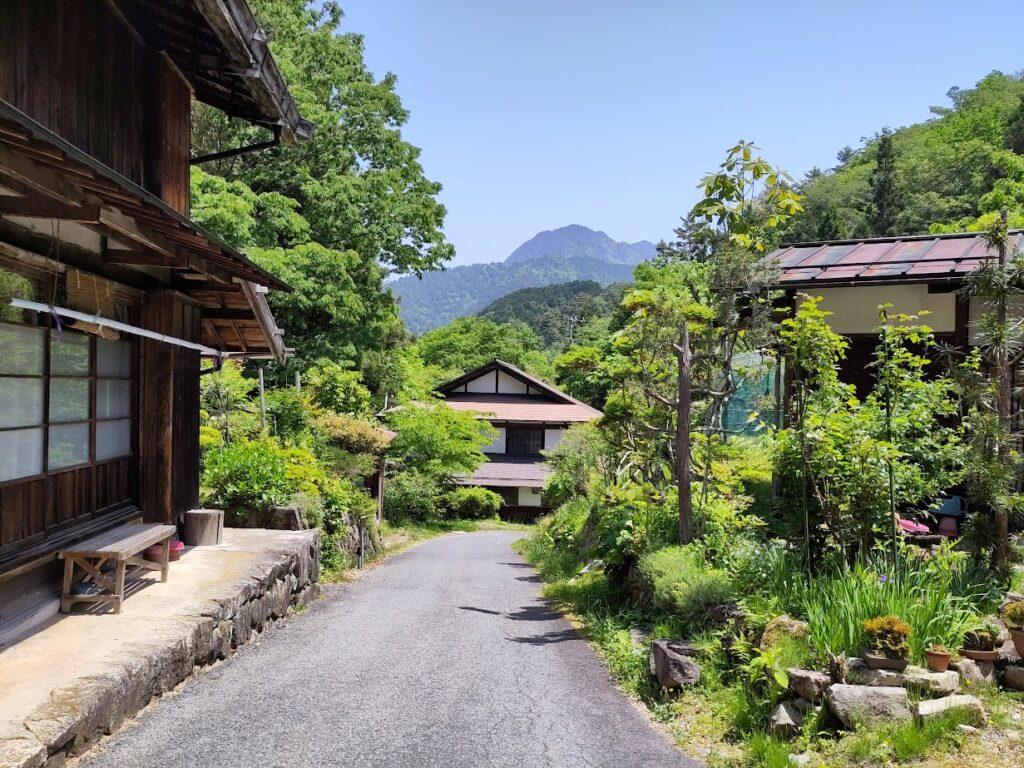
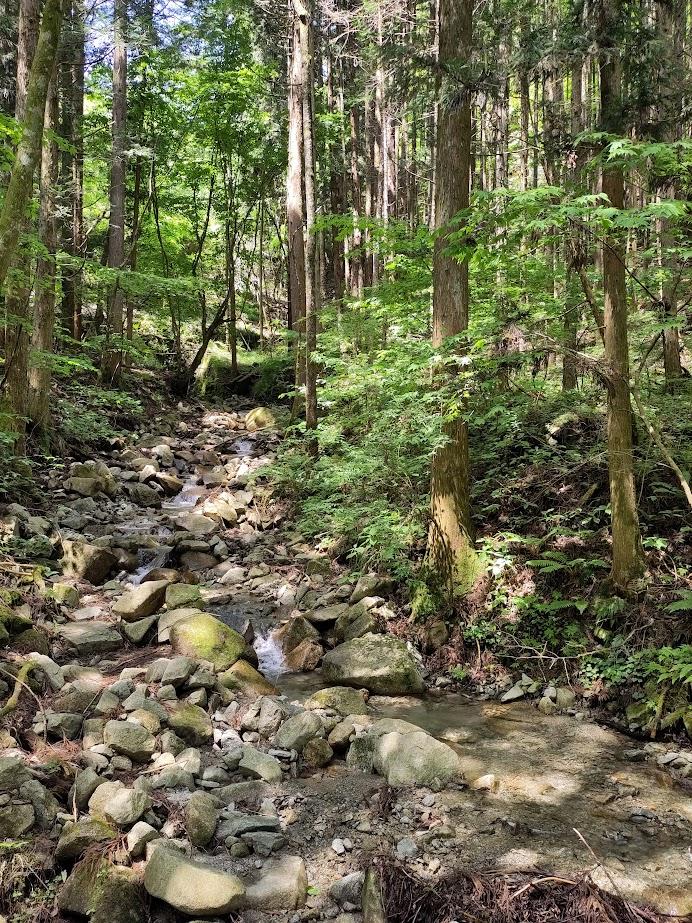
Along the trail, there’s a nice pit stop, a tea house where hikers can rest and have a free tea. Those passing by can write where they’re coming from with a chalk on board in front of the tea house. It’s fun to see all those nationalities (especially because we hardly met anybody during the hike).
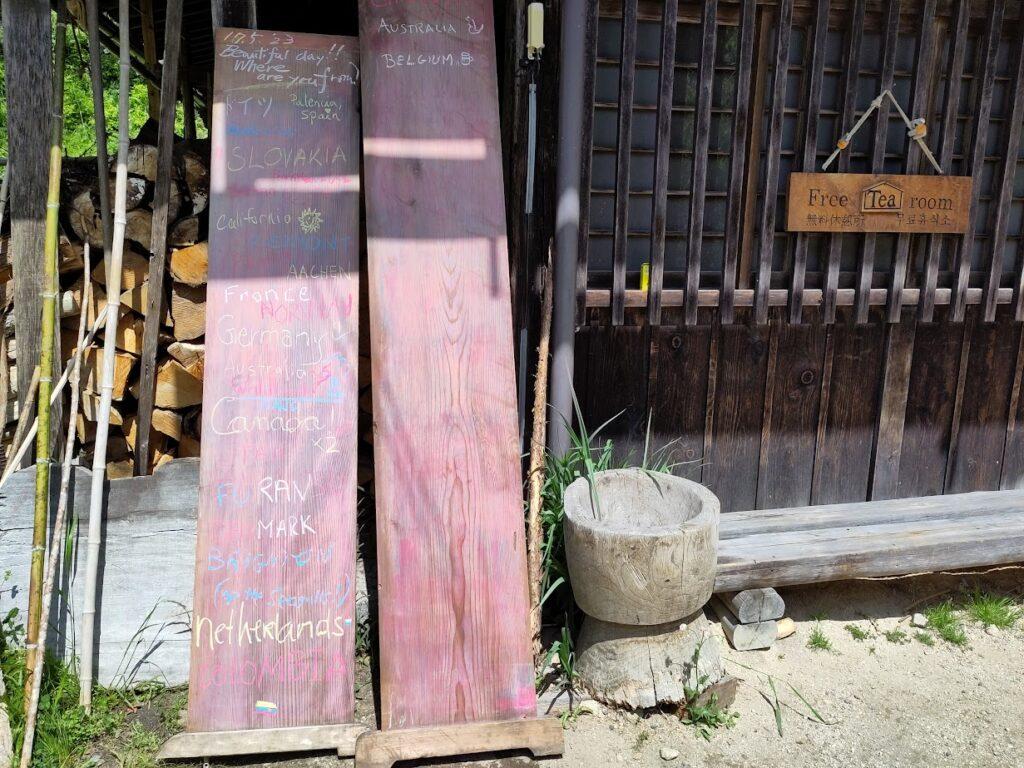
We reach the village of Tsumago a bit after 11 AM, wander in the streets, where a lot of shops and restaurants are closed, until we find a soba restaurant.
After Tsumago, we had planned on walking another 3.5 kilometers to the station, en route to the next step, but we got scared about missing the train and ended up going with a taxi so we didn’t take any risk. Unfortunately, we somehow had the wrong bus timetable and ended up waiting for one hour and a half around the station (not much to see apart from two shops where we find our own portable bear bell, and an ice cream).
Torii pass
From the station, we take the train to Yabuhara (1.15 hour) to walk the Torii pass (another bit of the Nakasendo trail) which will lead us to Narai-juku. And up and up we go! After a harsh start on a paved road, we continue the ascension through the woods until we reach 1 200 meters in altitude (and the torii). From there, we walk down to Narai-juku, a really cute village along the water, but also kind of a ghost town, with no activity (really much like the other villages).

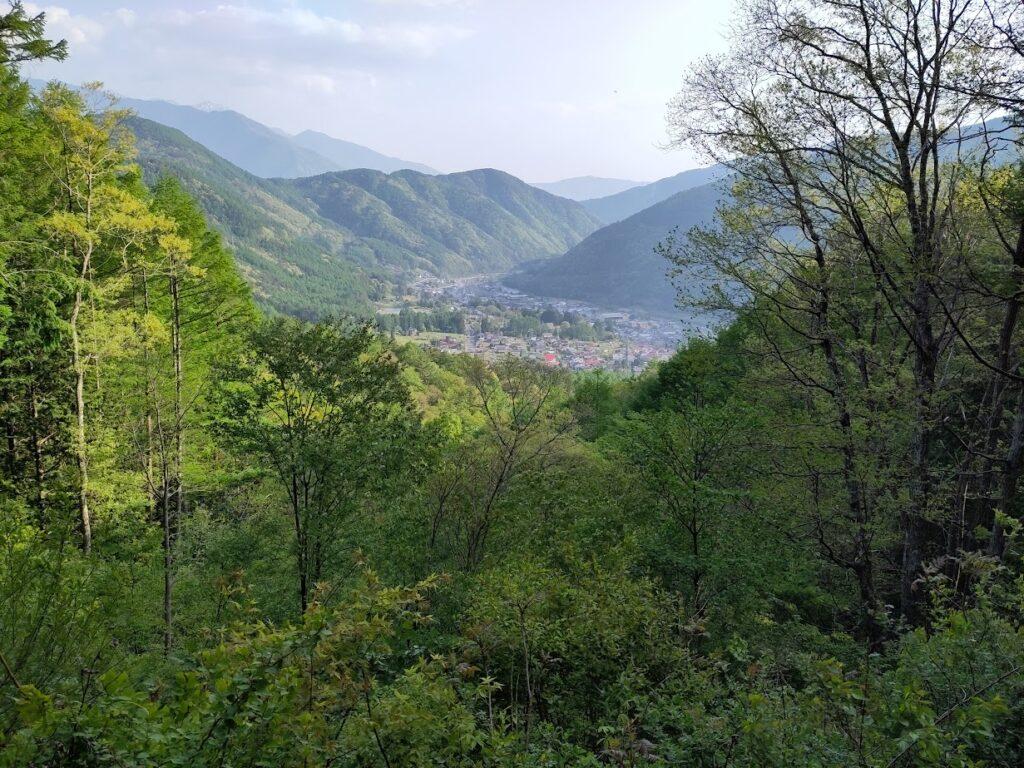
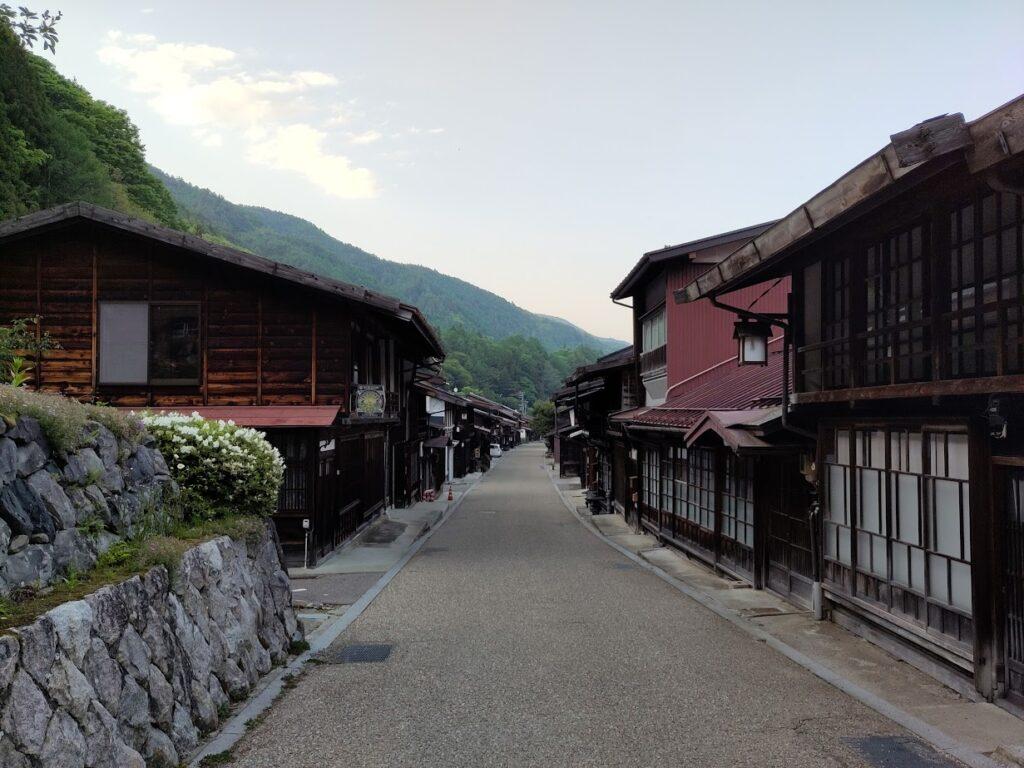
When planning our trip, we didn’t dare spending too much time in this area, but the beautiful villages made us want to stay longer and enjoy the quietness. Now, we know that public transportation is reliable, even outside touristy places. We might go back on the Nakasendo trail during a future trip to Japan, now that we know it’s safe and easy to navigate, but look for a more preserved section of it.
Tonight, after walking a good 20 kilometers, we head to Shiojiri, a random town we chose for the night because we were not sure we would make it on time to Matsumoto. (Again, we know better now, we could totally have made it to Matsumoto because evening and night transportation in Japan is not a problem at all.)
I do not recommend stepping foot in Shiojiri, as it’s the only place in Japan that gave us the creeps. Even though nothing really happened, the neighborhood was full of escort bars, we met some drunkards in the streets who could barely walk, and the whole town had an unpleasant feeling to it.
Matsumoto
We take the train at 7.40 AM for a little hour. It’s sunny and really hot again. Thanks Japan for all the coin lockers everywhere, so we didn’t have to keep our big backpacks on our back all along.
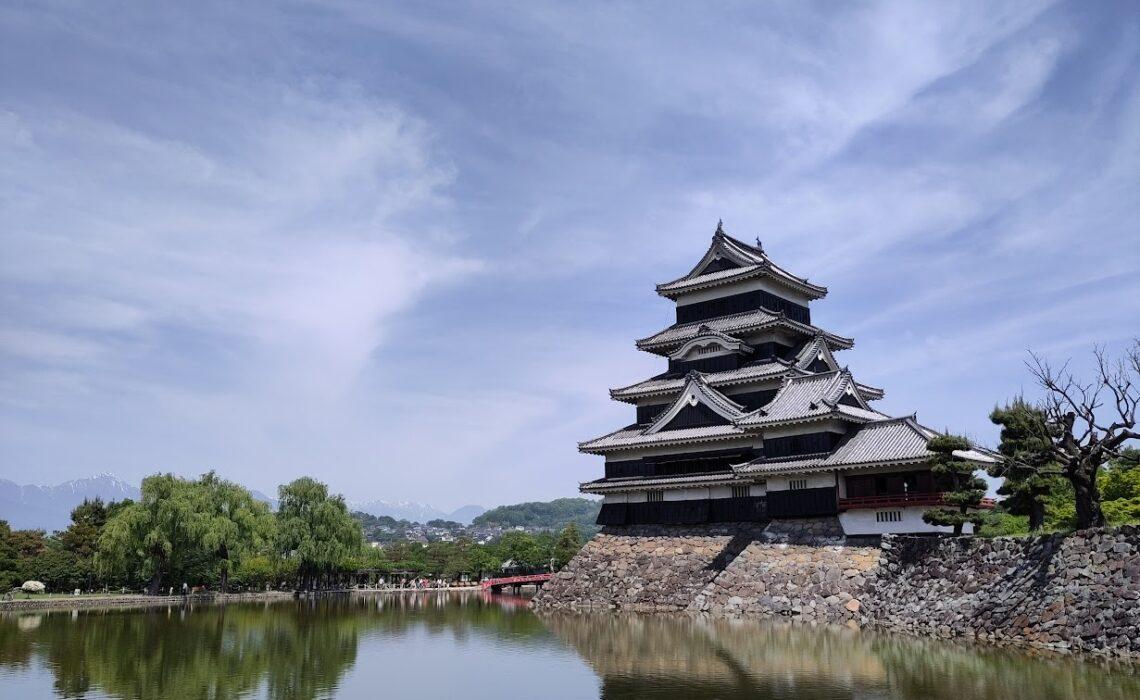
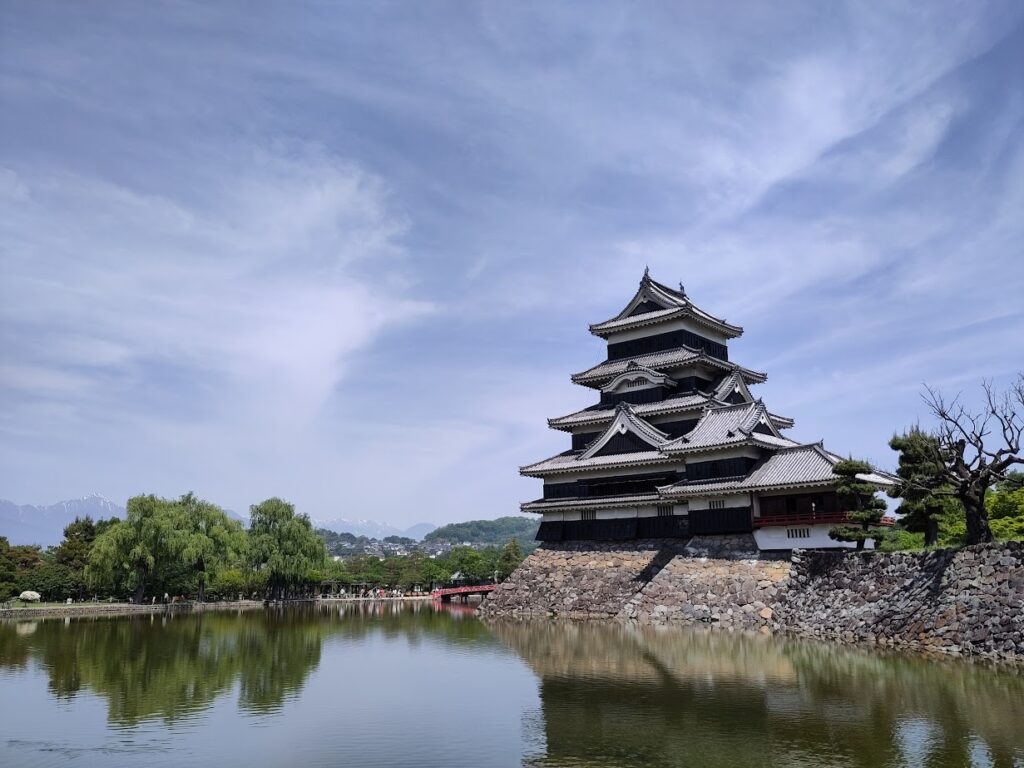
Matsumoto castle is smaller than Himeji, but I found it much more beautiful, especially because it’s surrounded by water and the surroundings are making it stand out (trees, mountains, no modern buildings in sight).
There’s only one tour bus, pretty calm, not many visitors. We visit the inside but to me, it’s not that interesting, especially since we did it at Himeji too (it’s very alike). We spend more time in the surrounding garden, to enjoy the castle from all angles.
A miso brewery!
We wrap up our Matsumoto visit (the city, not the castle) with the Ishii miso brewery, about a 20 minutes walk from the castle.
As many Japanese condiments, miso is fermented and thus made in a brewery. At Ishii, you can get a free tour of the facilities in English, without booking, and you can buy their products at the brewery (from miso paste to transformed products). My partner and I really like visiting distilleries and breweries, and we love Japanese cuisine, so we found it really interesting.
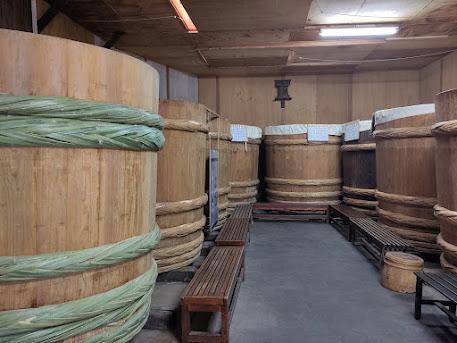

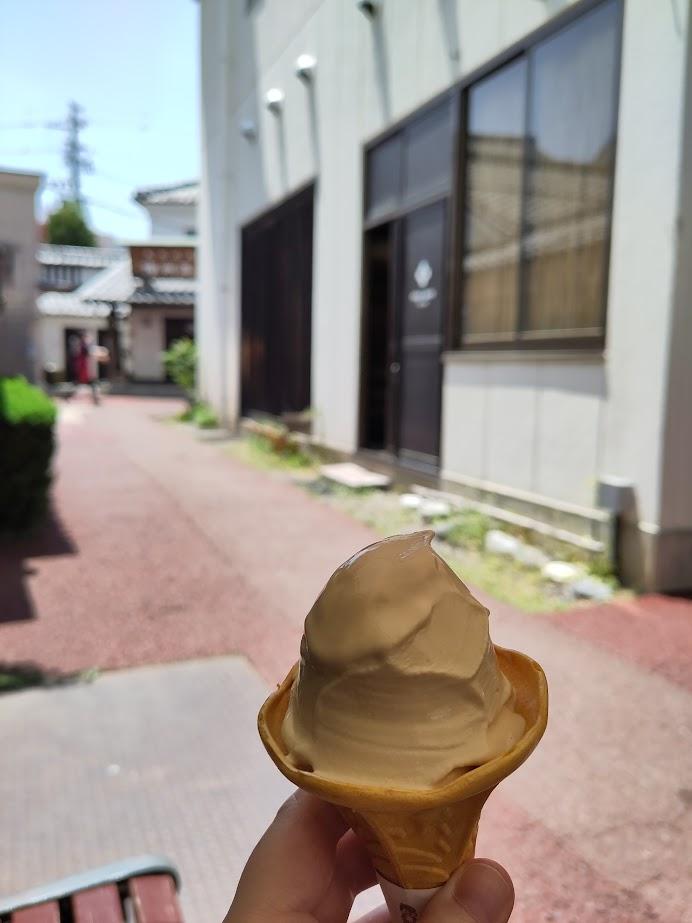
Before leaving the brewery, we tried their miso soft serve ice cream, and damn it was surprisingly delicious!
Next up, we’re going to Nagano! You’re coming with us?