Dernière mise à jour le 15 January 2026
What should you take, or not, for a one-month travel in Japan, travelling with the train and other public transportation? In this post, I share what my partner (male) and I (female) brought with us to Japan. It covers our luggage for a trip during spring, and another during autumn.
Our goal was to keep it light so we wouldn’t have to carry extra-heavy luggage (and, let’s be honest, bring a few things back without worrying about the weight on the way back).
Making your luggage lighter when travelling to Japan
Before sharing our detailed luggage content, here are a few principles we followed, that can help you make your suitcases lighter and save space for souvenirs, even when visiting many destinations and with big temperature differences. During our first trip, in the spring, we had temperatures ranging from 14 to 31° C. In fall, it went from -1 to 27° C.
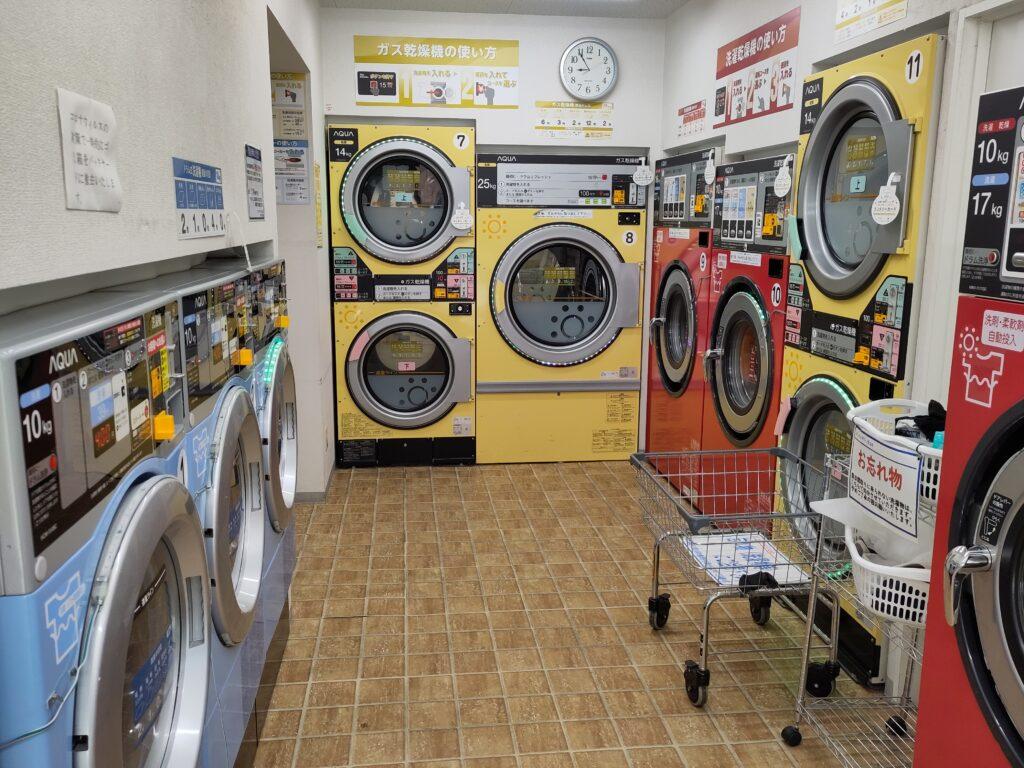
- Bring clothes to cover about 1/3 of the length of your trip. We went to Japan twice so far, each time for a whole month, and took clothes for about 10 days. We didn’t buy clothes over there, but rather used washing machines, largely available in Japan (either in hotels or in public coin laundry places).
- Use practical clothes made for hiking and outdoor activities. When travelling, we choose clothes that are practical rather than in style. It means we use a lot of pieces made for hiking or other outdoor activities, that are often light and thin while being waterproof or water repellent, and super breathable (which means you can wear then longer without sweating). They also work for a large range of temperatures, as they regulate body temperature, and they’re usually made for layering.
- Choose a good suitcase. A lighter suitcase gives you an extra margin. If travelling with public transportation, I strongly advise you to pick one with four 360° wheels, a solid handle, and bonus if it comes with brakes for the wheels!
Extra piece of information: on both our trips, we left with about 10 kg each, and came back with around 22 kg each.
For our second trip, in autumn, we brought a soft bag (sport bag type) in our suitcase so we could use it as an additional piece of checked luggage, if necessary, for our clothing (since our flight tickets included 40 kg of checked luggage). That way, we could use the space in our hard shell suitcase for fragile items. We also used a vacuum compression bag for part of our clothes.
Organizing suitcases with packing cubes
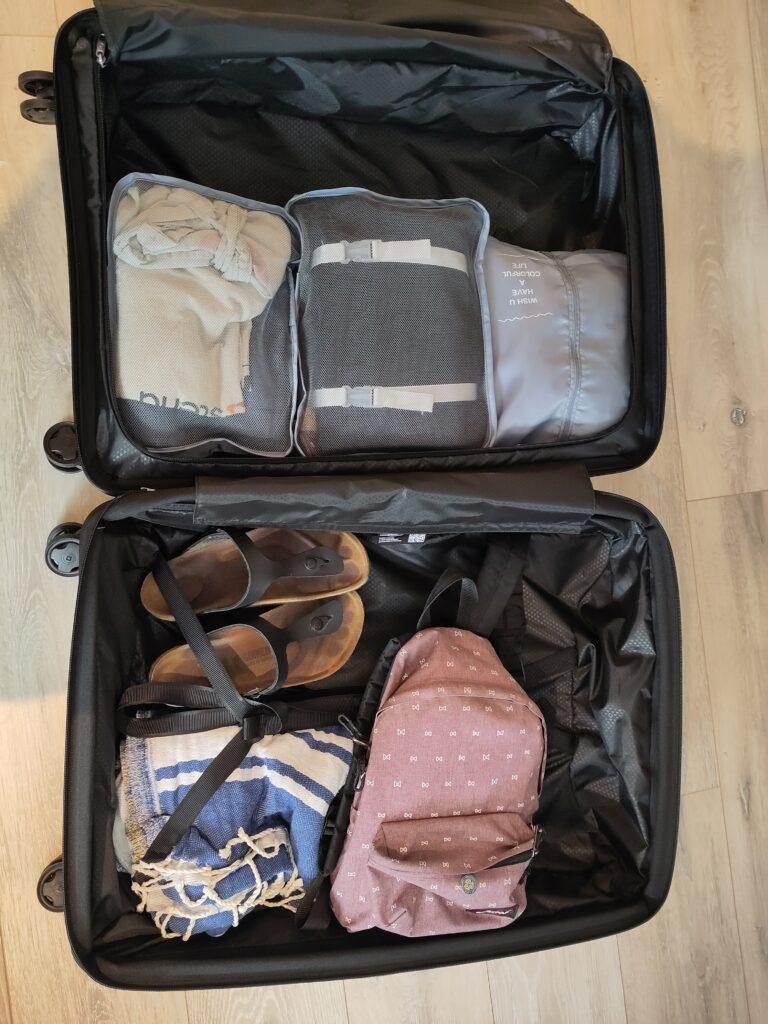
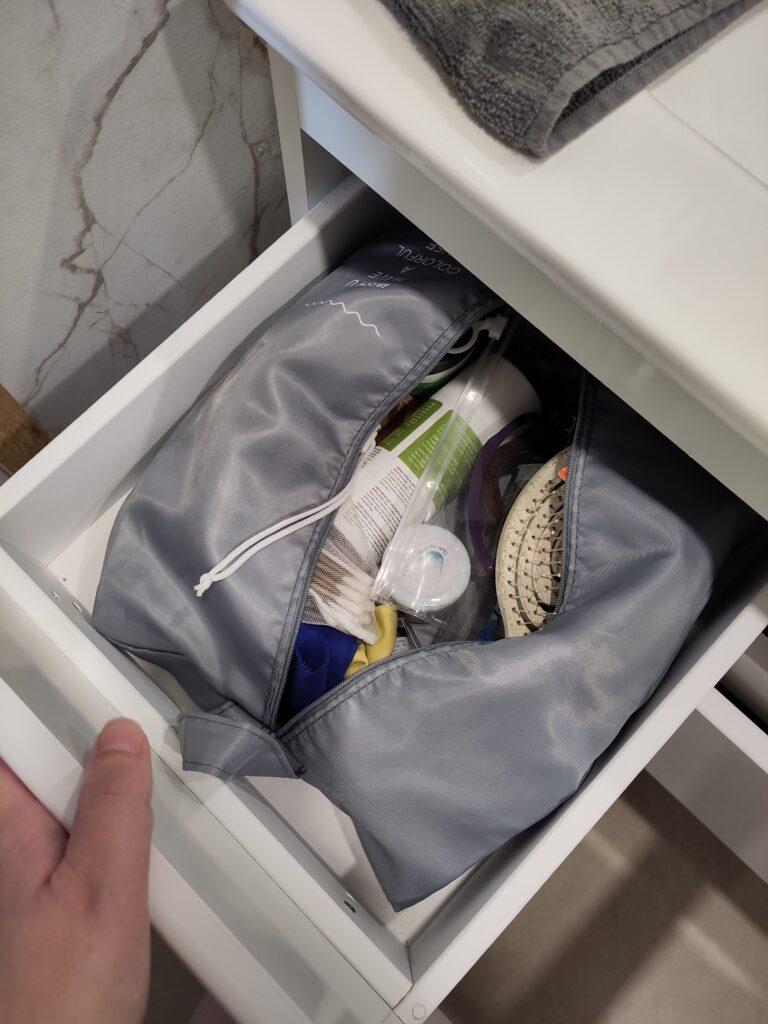
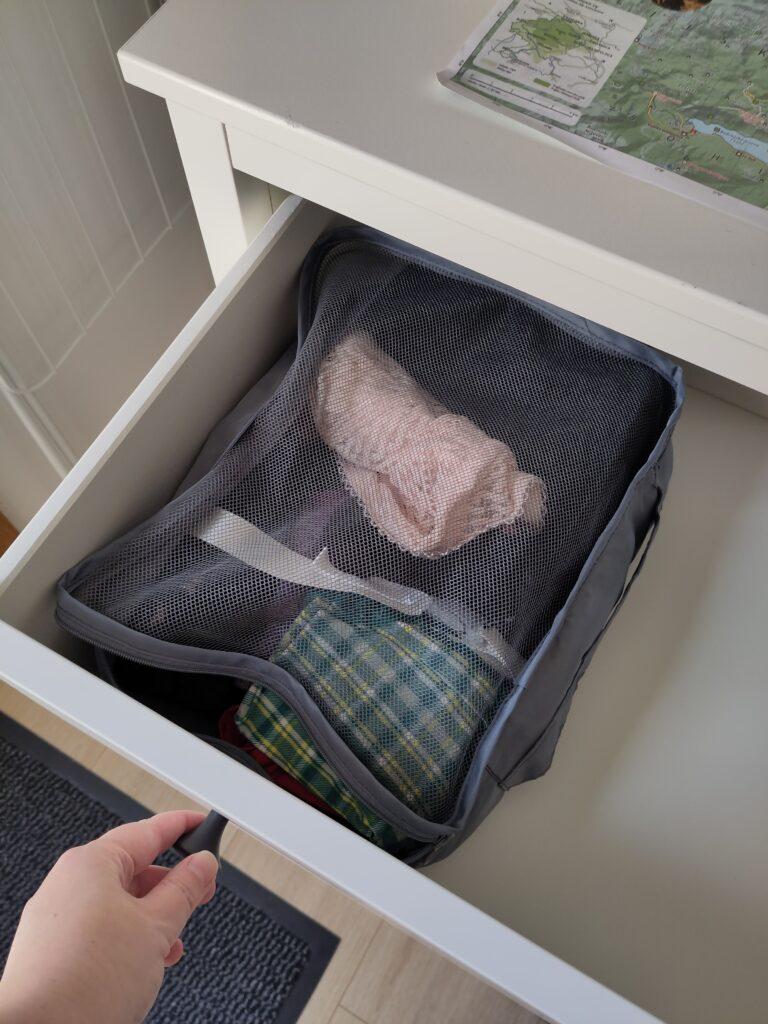
One thing we were really happy to have was those packing “cubes”, or packing organizers, that help keep things organized and tidy inside the suitcase. You can compress clothes or other soft items a bit with them (we found one that helps compress your clothes to half their volume while in Japan, which will be even more useful!).
In addition to helping with packing the suitcase, it’s convenient for taking stuff in your backpack, and for organizing your stuff in the hotel room, especially when changing cities a lot.
Here are specific cases where they helped:
To organize our clothes in tiny Japanese rooms
Hotel rooms are often small, and sometimes don’t even have cupboard or shelves. There’s no way you can leave your suitcase wide open somewhere and just grab your things from there. Often, you have no choice but to store your suitcase under the bed, or vertically in a corner.
With those packing cubes, we just took out the one needed for the coming days (with our changes of clothes) and could lay it on a little surface. With it’s semi-rigid shape, it’s almost like having a small drawer that you can just take out of your luggage, than put back in, without actually removing what’s inside.
To ship your luggage and carry you changes of clothes in your backpack
When we hiked part of the Nakasendo trail, we left with just a backpack containing our stuff for several days, and shipped our suitcases to another hotel where we’d stay a few days later.
Those packing cubes were great to put in our hiking backpacks, that are really high and narrow, to better balance the weight on your back. My clothes and other day-to-day stuff were not getting mixed-up with the other things in my bag that I had to keep at hand. It keeps objects tight and tidy, making it easier to put them in those narrow bags.
I also find it useful and convenient with classic backpacks, for the same reasons.

Which clothes should you bring to Japan?
I listed here things that we brought and actually used. Clothes depend on the season, the places you visit and the type of activities you planned (hiking, city, nature, indoors…).
One thing to note is that it’s usually hotter inside buildings in Japan, compared to central Europe, so unless you like it hot and don’t mind about temperature differences, it’s good to have lighter clothes if you spend a lot of time indoor (including shopping!).
Be aware of temperature differences in Japan, whatever the season
Temperature differences between regions can be huge. Also, you’ll often experience lower temperatures in the mountains. Look for information about what to expect in the different places you’ll visit.
For example, we had 24°C in Hiroshima on November 12, same in Narita-san on December 1st, but it was below zero around Kawaguchi and Fujiyoshida on November 19 and 20, the same year!
There’s also quite a big temperature difference between the morning and the middle of the day, and the sun sets early in Japan.
Our luggage for a month in autumn
The best approach for visiting Japan in fall is layering your clothes! You’re better with clothes that you can easily add up or remove, from one day to another, or even from same-day morning to same-day noon. Average temperatures were above those in central Europe, but there can be particularly cold days, as well as places where those are always way lower all year long.
Regarding this trip, we also had to bring some really hot clothes (namely, winter beanie, gloves and scarves) for our two-day stay around mount Fuji (Kawaguchiko and Fujiyoshida), and for two mountainy destinations.
I don’t know if we owed it to the very dry autumn air, but we felt like we hardly sweat during this trip, while moving a lot. As a result, we could wear the same t-shirts for longer than expected.
Our itinerary was Tokyo, Kanazawa, Obama, Kinosaki, Fukui, Hiroshima, Miyajima, Kyoto, Kurama et Kibune, Shizuoka, Kawaguchi, Fujiyoshida, Saiko Iyashi, Mitake, Oyama, Narita. Temperatures ranged between entre -1 and 27°C.
My clothes (woman, not especially cold-averse but can’t stand very windy weather and cold damp weather)
- 10 days of underwear
- 2 light sweaters (can be worn on a t-shirt and under a vest)
- 1 light vest (sport type, windproof)
- 1 hot vest (wool or similar heat)
- 4 long sleeves t-shirts
- 1 short sleeves t-shirt
- 1 pair of trousers or jeans
- 1 comfort pants (like light sweatpants or a light material like linnen)
- 1 long skirt and 2 pairs of tights
- 1 raincoat (used very little)
- 1 neck warmer (those very thin and light hiking type, can be replaced by a light scarf)
- 1 hot scarf (wool or equivalent)
- 1 pair of gloves
- earmuffs (or beanie)
- 1 pair of sneakers made for both light hiking and city
- 1 pair of ankle boots, Caterpillar style (not actually necessary because we didn’t do difficult hikes, but I like to have a second pair of shoes when travelling)
- backpack
- handbag
- sunglasses
Most of the time, I was wearing a long sleeves shirt, a light sweater and a light vest with a neck warmer. I removed the neck warmer when indoor and if the weather was hot and sunny. I added my hot vest on top of the other layers if the temperatures were lower, in the morning and in the evening for example.
My partner (male, gets hot easily)
- 10 days of underwear
- 5 short sleeves t-shirts
- 2 long sleeves shirts (worn instead of a vest)
- 2 hot vests
- 1 hiking pants that can be turned into shorts
- 1 classic pants (or jeans)
- 1 waterproof coat (not worn a lot)
- 1 pair of hiking boots
- mittens
- neck warmer
- beanie
- backpack
- sunglasses
- cap
Our luggage for a month in the spring
We arrived in Japan on May the 8th that year, just as temperatures were getting warmer and the air more humid. We had quite a lot of rainy days, especially towards the end in Tokyo.
There was also a big temperature difference around Kawaguchiko, and on Hokkaido. Temperatures ranged between 14 and 31° C.
It was our first trip in Japan and I didn’t take detailed notes at the time, but I remember thinking we could have gone with less clothes.
My clothes (woman, not especially cold-averse but can’t stand very windy weather and cold damp weather)
- 10 days of underwear
- 1 hiking vest (water repellent, windproof, mid heat)
- 1 classic vest
- 1 raincoat (it’s a super rainy season, however it’s also hot and I found it uncomfortable as it made me sweat a lot, so I’d go for another kind of coat that is fast drying but breathable)
- 1 hiking pants
- 1 pair of jeans (good for cooler days, but way too hot most of the time)
- 1 pair of shorts
- 2 long sleeves shirts
- 5 short sleeves shirts
- 2 tank tops
- 1 sweater
- 1 bob hat
- 1 pair of sneakers (light hike and city)
- 1 pair of sandals (I didn’t wear them that much, but it felt good letting my feet breath and changing shoes from time to time)
- 1 neck warmer
- 1 hiking backpack (especially because we walked part of the Nakasendo trail)
- 1 city backpack
- 1 fanny pack
- sunglasses
Sorry, I didn’t take note of my partner’s suitcase that time!
What is useless in Japan (don’t bother bringing this in your luggage!)
Pajamas (well, in most cases…)
I like to have something comfy (and clean) to hang out in the hotel room, go to a vending machine or coin operated washing machine inside the hotel, or even sometimes to have breakfast. In most hotels and even in private stays, either pajamas or yukata are provided. However, the sizes suit most Japanese figures but might be a bit too short or small if you’re taller or bigger. Several times, we couldn’t decently use the indoor clothes provided, but we’re usually wearing a Large or Extra-large size in Europe.
Bikinis and swimsuits
For my first trip to Japan, I brought a bikini because I’m used to it when travelling in Europe, as it’s really common to have a swimming pool in hotels. It’s not so in Japan. What you’ll often have access to are public baths (sento), but you’re not allowed to wear anything in the water. Also, lying on a towel at the beach is not something super common in Japan, and it’s often prohibited if you have tattoos. So unless you’re specifically visiting a region when beach bathing is a common activity, there’s no use brining swimsuits.
Umbrella
I would only bring one during the heavy rain season (generally June and July). There are many places where you can rent an umbrella, or even borrow them for free, or take an umbrella that was abandoned by someone else (you’ll find stands with self-service umbrellas in many train stations, and hotels often have rental services or lend you one for free).
Don’t take too many clothes… but also not too little
By using coin laundry, you can reuse the same clothes instead of bringing enough for your whole stay. However, pay attention to this:
- In almost every hotel where we did our laundry, the tumble dryers were working poorly and our clothes were still very wet (even when we tried really small batches, even with a single piece of clothes). As room are pretty small, it’s not easy to hang your clothes in there for natural drying. It’s best to go to a coin laundry facility in the city, where machines work better, or to use the washing machine and dryer when staying at a host’s. In any case, Japanese washing machine are made for smaller charges than ours. Also, do your laundry asap so you can allow extra time for your clothes to dry. This system is difficult to sustain if you change place every single day.
- If you’re washing your clothes during your trip, you have to make time for it, so in my opinion it’s worth it for longer trips (at least two weeks). It’s not a bad thing in itself, as traveling in Japan can sometimes feel overwhelming, and you could be tempted to plan to much and forget to take breaks!
- Good news: Washing machines in coin laundries dispense product automatically, you don’t have to bring or buy any.
Other things to bring with you when visiting Japan
A reusable water bottle
There are many places where you can get free water refills, and most toilets have drinkable tap water (and there are many toilets in Japan, even in the middle of nowhere), so you can easily avoid buying plastic bottles (they wouldn’t make you spend a lot of money, but they’re a avoidable waste).
Menstrual tampons
Japanese are not big on tampons, so if you’re using them for your period and want a specific design and/or absorption power, bring your own (otherwise, you’ll just find one model and have to deal with it).
Night mask for the eyes
The sun rises really early and curtains are usually letting a lot of it through, so if you’re a light sleeper and wish to wake up later than 6 AM (or 4 or 5 AM in spring or summer), definitely bring an eye mask.
Sunscreen
Japan has a lot of sunny days, even in autumn.
A stamp collection notebook
Stamps are a nice, fun and free souvenir to bring back from Japan, you just need a notebook to collect them from JR stations, and sometimes other stations, but also some shops, tourists spots, temples…
Thing to pass the time on public transportation
If you’re using long distance trains during your trip, and when hang at your hotel to take a break, you’ll be happy to have something to do, either it is (travel) journaling, drawing, reading, listening to podcasts or music…
Wireless earbuds
Really often, all the information is not translated into English in museums and other attractions, but you can get free guidance by scanning a QR code or using an app. This guidance sometimes comes as audio explanations, and since listening to your phone out loud is a big no-no in Japan, make sure to have your earpods with you.
A hand towel
Many restrooms don’t have paper towels or electric driers because Japanese people are used to carrying their own hand towel, so you should bring one with you, or buy one over there as a souvenir.
Tote bags and other reusable bags
Japan is making an effort to reduce its plastic use, for example by not giving plastic bags in shops (unless you pay for them). Even though they’re not expensive, it’s easy to avoid it by having your own reusable bag. Those will be useful to pack your souvenirs at the end of the trip.
Luggage in Japan: more tips
Coin lockers and luggage storage
Lockers are available in stations and many other places and let you store your luggage for as long as 72 hours (generally, please check individual conditions). Some visitor centers also offer storage services.
In most stations, you can use coin, IC cards and credit cards to lock and pay your locker.
This is a great way to wander in the city or to visit further places without carrying big, heavy bags or suitcases. For example, we visiting Miyajima island, departing from Hiroshima, so we left our suitcases in lockers at Hiroshima to visit the island with only our change of clothes for the day after in our backpacks, then just picked them up at Hiroshima before taking the train to our next destination.
The average price (2025) for a locker that can hold a checked luggage in between 600 and 800 yen a day.
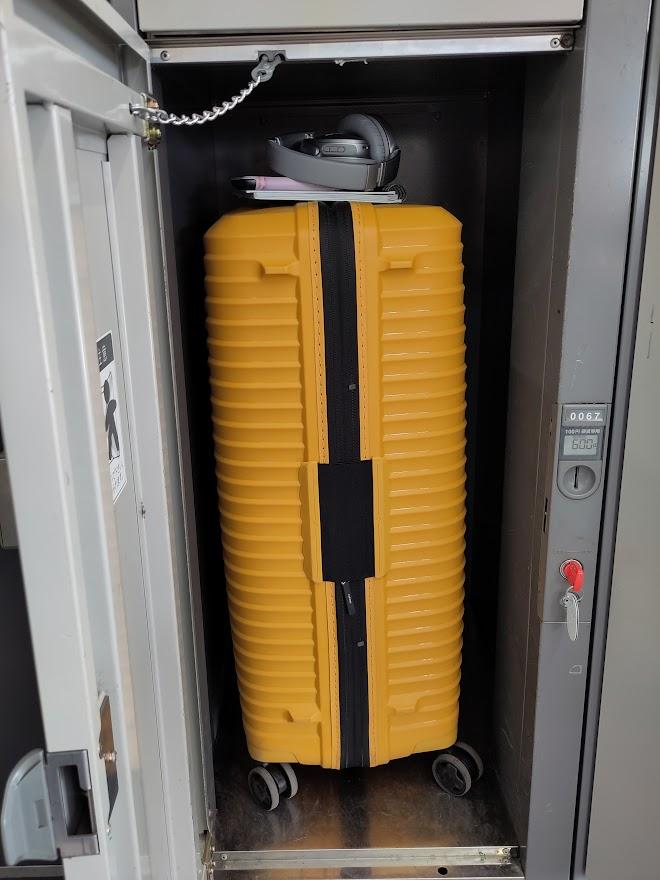
Use them if you’re in between hotels so you’re not stuck with them!
Good to know: there’s a luggage storage service at Narita airport at JAL ABC (in 2025 it was 700 yen for up to 8 hours storage for checked luggage).
Shipping your luggage from one city to another
If you’re changing hotels a lot, you can ship to suitcases to the next one where you’ll be staying for a longer period, so you don’t have to carry them in local transportation or across the city. This service is available at most hotels, or directly with a Kuro Neko Yamato counter. If your accommodation is unmanned and you won’t be there to receive the luggage, you can also have them delivered in those Kura Neko counters.

Luggage shipping and other “Hands-Free Travel” solutions are highly recommended by the Japan Tourism Agency, as a way not to disturb locals while also making it easy for you.
Read next: Everything you should know for a first trip to Japan